
Best Pickleball Equipment for Beginners
Complete guide to selecting paddles, balls, nets, and court gear. Compare top brands and find equipment for your skill level.
What You Actually Need to Start Playing
Pickleball is one of the most affordable racket sports to get into, but the sheer number of equipment options can overwhelm a new player. The good news is that you only need four things to start: a paddle, a few balls, court access, and a pair of athletic shoes with lateral support. Everything else is optional. This guide walks you through each purchase decision so you spend wisely and avoid gear that does not match your skill level.
Essential Gear Checklist
- Paddle: $30 to $200 depending on material and quality
- Balls: $10 to $20 for a pack of 6 to 12
- Court shoes: $50 to $120 for proper court or cross-training shoes
- Court access: Free at public parks, or use a portable court system
Choosing Your First Paddle
The paddle is your most important equipment decision. It directly affects your control, power, and comfort during play. Beginners should prioritize forgiveness and control over raw power, since developing consistent shot placement matters more than hitting the ball hard when you are learning.
Key Specifications
- Weight: 7.3 to 8.4 oz is the sweet spot for beginners. Lighter paddles offer more control; heavier paddles generate more power with less effort.
- Grip circumference: 4 to 4.5 inches for most adults. Measure from the middle crease of your palm to the tip of your ring finger.
- Core material: Polymer honeycomb is the standard. It provides the best combination of control, feel, and noise reduction.
- Face material: Fiberglass (composite) gives a softer feel. Carbon fiber (graphite) offers a crisper response and lighter weight.
Paddle Shape Guide
- Standard (16" x 8"): Best for beginners. Widest hitting surface and largest sweet spot for more forgiving contact.
- Elongated (16.5" x 7.5"): More reach and slightly more power, but a smaller sweet spot. Better for intermediate and advanced players.
- Wide body (15.5" x 8.25"): Maximum surface area. Great for defensive players who prioritize blocking and dinking.
Expert tip: Start with a standard shape and switch to elongated only after you can consistently hit the center of the paddle.
Budget Ranges and What You Get
Budget ($30 to $60)
Wood or basic composite paddles. Heavier and less refined, but perfectly functional for casual play and learning the basics. Good for players who are not sure they will stick with the sport.
Mid-Range ($60 to $120)
Fiberglass or graphite face with polymer core. This is where most beginners should invest. These paddles offer excellent control, reasonable power, and will last years with proper care. Best value for committed new players.
Premium ($120 to $200+)
Advanced materials like raw carbon fiber faces, thermoformed edges, and specialized cores. These paddles offer maximum spin, power, and feel but the differences are subtle for new players. Save this tier until your technique is established.
Selecting the Right Balls
Pickleball uses a perforated polymer ball similar in size to a wiffle ball but constructed from harder plastic. The key distinction is between indoor and outdoor balls, which differ in weight, hole count, and durability.
Outdoor Balls
- 40 smaller, rounder holes
- Heavier and harder plastic
- More durable against rough surfaces
- Less affected by wind
- Faster gameplay with more consistent bounce
- Crack more easily in cold weather
Indoor Balls
- 26 larger holes
- Softer, lighter plastic
- Slower gameplay with higher arc
- Quieter on impact
- Better for gyms and recreation centers
- Last longer since indoor surfaces cause less wear
Buy based on where you play most often. If you split time between indoor and outdoor, keep a separate set for each. Balls are inexpensive enough that having both types is a minor investment.
Court Shoes: Do Not Skip This
Proper footwear is the most overlooked equipment decision for beginners, and it is also the most important for injury prevention. Pickleball involves rapid lateral movements, quick stops, and pivots. Running shoes are designed for forward motion and provide minimal lateral support, making them a poor and potentially dangerous choice for pickleball.
What to Look For in Court Shoes
- Lateral stability: Reinforced sides and a wider base prevent ankle rolls during side-to-side movement
- Non-marking sole: Required for indoor courts and preferred for painted outdoor surfaces
- Low-to-ground profile: A lower heel-to-toe drop improves balance and court feel
- Toe reinforcement: Dragging toes during serves and volleys wears through flimsy toe boxes quickly
- Cushioning: Moderate cushioning in the heel and forefoot absorbs impact from the hard court surface
Dedicated pickleball shoes now exist from major brands, but any quality tennis or volleyball shoe works well. Budget $60 to $120 for a shoe that will protect your feet and ankles through hundreds of hours of play.
Court Access: Your Playing Surface Options
You cannot play pickleball without a court, and finding court time can be the biggest challenge for new players. Public courts at parks and recreation centers are free but often crowded during peak hours. Many tennis facilities now offer converted pickleball courts as well. If you want reliable, on-demand court access, there are several approaches.
- Public parks: Free but often require waiting during popular times. Check your local parks department website for locations and hours.
- Recreation centers and YMCAs: Membership required but courts are generally well-maintained with posted schedules.
- Tennis court conversion: Many tennis courts have pickleball lines taped or painted. You can add temporary lines to any tennis court yourself.
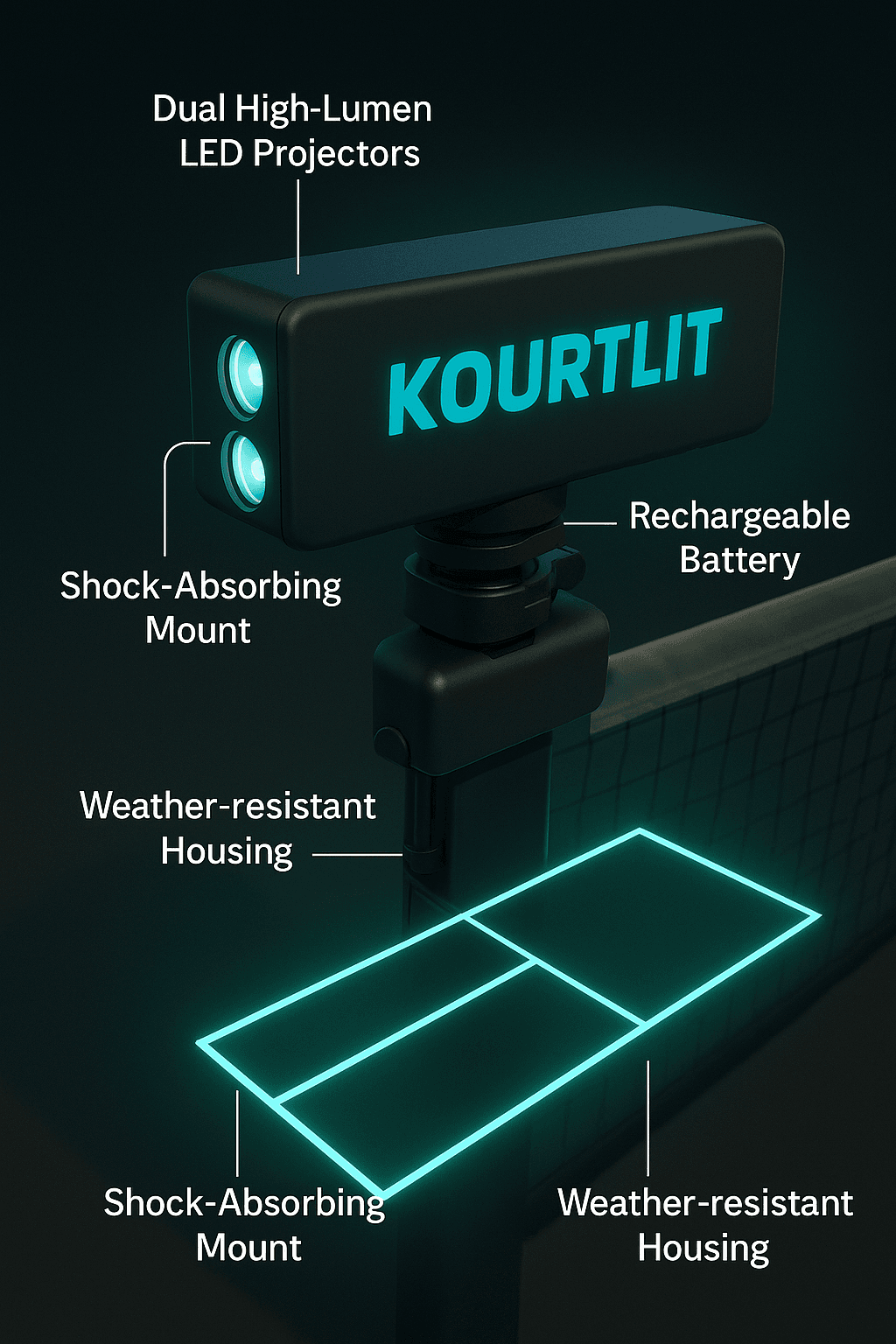
- Driveway or parking lot: Any flat, hard surface measuring at least 30 by 54 feet works with tape or a KourtLit portable projection system that projects regulation lines instantly.
For a detailed analysis of portable versus built courts, read our KourtLit vs Permanent Courts comparison.
Useful Accessories
Once you have the essentials covered, a few accessories can improve your experience significantly.
- Paddle bag or backpack: Protects your equipment and makes transport easy. Many include separate compartments for balls, water bottles, and personal items.
- Overgrips: Inexpensive wraps that go over your paddle grip to absorb sweat and improve traction. Replace them every few weeks.
- Ball holder or tube: Clips to your waistband and holds extra balls during practice so you spend less time chasing them.
- Portable net: $80 to $200 for a regulation net system that sets up in minutes. Essential if you play in areas without permanent nets.
- Sun protection: Hat, sunglasses with a sport strap, and high-SPF sunscreen for outdoor play.